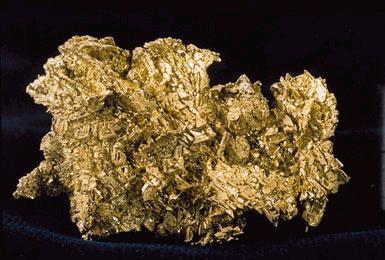
When you are standing knee-deep in a mountain creek in Monroe County with only four hours of daylight, spending twenty minutes hunched over your pan trying to tease fifteen microscopic specks of flour gold out of two tablespoons of stubborn black iron sand is a waste of prime digging time.
Here is the secret used by experienced Appalachian panners: at the creek, pan each bucket down to the last two tablespoons of heavy black sand concentrates, pour those concentrates straight into a wide-mouth plastic jar ("cons jar"), and keep digging! Then, when you get back to your campsite picnic table or your kitchen counter in Maryville or Knoxville, use this 4-step cleanup protocol to recover 100% of your fine gold.
Step 1: Break Water Surface Tension With Surfactant (Dish Soap or Jet-Dry)
Fill a plastic dishpan or wide mortar tub with three inches of clean tap water at home and stir in two drops of clear Dawn dish soap or Jet-Dry dishwasher rinse aid. Why? Tiny, flat flakes of East Tennessee "flour gold" are so thin that if they dry out or touch an air bubble, pure water's high surface tension can make real gold float like a tiny tin boat! Two drops of surfactant reduce water surface tension immediately, forcing every microscopic spec of gold to sink like a stone.
Heading to the Cherokee National Forest or Coker Creek? Pack a U.S. Forest Service Class 1 compliant hand-panning kit: the Garrett Deluxe Gold Panning & Classifier Kit, a Stainless Bedrock Crevicing & Snuffer Bottle Kit for cleaning slate cracks, and a Plunger Black Sand Magnet.
Step 2: Pull Out the Magnetite With a Plunger Black-Sand Magnet
The heavy black sand in Coker Creek and Blue Ridge streams consists primarily of two iron oxide minerals: Magnetite ($ ext{Fe}_3 ext{O}_4$, strongly magnetic) and Ilmenite ($ ext{FeTiO}_3$, weakly or non-magnetic).
- Pour a small spoonful of your black sand concentrates into your 10-inch finishing gold pan submerged in about half an inch of soapy water.
- Hold a Quick-Release Plunger Black Sand Magnet (or a strong neodymium magnet slipped inside a thin plastic sandwich bag) just above the wet black sand and swirl it gently.
- The black magnetite grains will jump up onto the bottom of the magnet sheath while the non-magnetic gold stays safely on the pan floor! Hold the magnet over a separate waste cup and press the thumb plunger (or turn the plastic bag inside out) to drop the black sand.
- Pro Tip: Always re-pan your removed black sand pile once before throwing it away, just in case a tiny flake of gold was mechanically trapped between two jumping magnetite grains!
Step 3: The "High-Side Walk" Tap and Snuffer Bottle Vacuum
Once 70% of the black sand is removed by the magnet, tilt your finishing pan slightly toward you with a quarter-inch puddle of water at the bottom crease. Tap the upper (raised) rim of the pan sharply with the heel of your hand 10 to 15 times:
- Every tap sends a tiny vibration wave through the plastic pan floor while water sloshes downward.
- Because gold has so much more friction and inertia than the remaining ilmenite sand, the gold actually "walks" uphill toward the tapped top edge of the pan while the black sand slides downhill into the water puddle!
- Use your snuffer bottle to vacuum up the clean yellow gold line, then transfer your gold into a water-filled glass display vial.