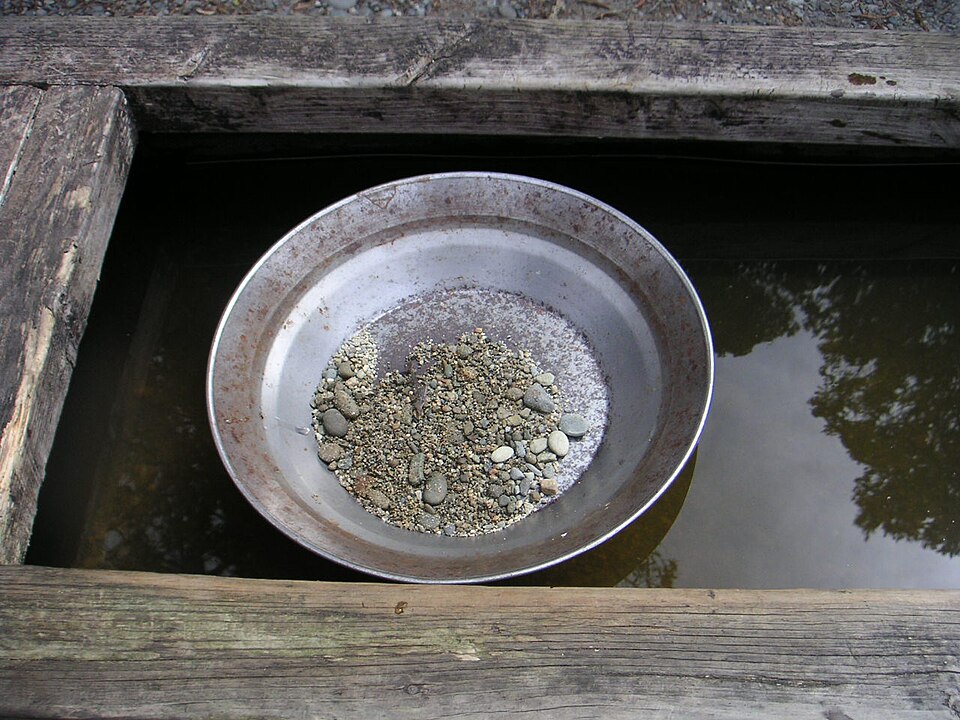
When a beginner walks up to a mountain stream in the Cherokee National Forest, they usually walk over to the prettiest, softest pile of blonde beach sand in easy reach, shovel it into their classifier sieve, pan it out, and wonder why the bottom of the pan holds zero black sand and zero gold.
Soft, uniform blonde sand collects in low-energy slack water where flood currents were far too weak to push heavy lead-weight gold! To find real East Tennessee placer gold, you must learn to read a mountain creek like a hydrologist.
The 4 Highest-Probability Gold Drop Zones in an Appalachian Creek
| Creek Feature ("Drop Zone") | What Happens During a Mountain Flood | Exact Spot to Shovel & Sample |
|---|---|---|
| 1. Inside Bends (Point Bars) | Fast current slams into the outside curve and decelerates sharply along the inside curve | Sample the upper-to-middle third of the inside gravel bar where packed cobbles meet bedrock |
| 2. Downstream Tail of Huge Boulders | Water splits around an immovable boulder, creating a turbulent low-pressure vacuum eddy directly behind it | Dig down right behind the downstream ("lee") side of the largest boulders in the main channel |
| 3. Canyon Widening Zones | Water shooting through a narrow bedrock chute suddenly spreads out and loses 50%+ of its velocity | Sample the gravel fan immediately below where a narrow rock gorge widens out |
| 4. Tilted Slate Bedrock Riffles | Jagged layers of Ocoee slate trap heavy particles skipping along the creek bottom | Use a stainless crevice scratcher and snuffer bottle to clean every transverse crack |
Heading to the Cherokee National Forest or Coker Creek? Pack a U.S. Forest Service Class 1 compliant hand-panning kit: the Garrett Deluxe Gold Panning & Classifier Kit, a Stainless Bedrock Crevicing & Snuffer Bottle Kit for cleaning slate cracks, and a Plunger Black Sand Magnet.
Follow the "Indicator Minerals": Black Magnetite Sand and Heavy Cobbles
How do you know within thirty seconds if you are digging in the right spot of an inside bend? Watch what stays in your 14-inch riffled gold pan during your first test pan:
- Bad Sign (Barren Sand): If your full pan washes down to almost nothing—leaving only light tan quartz grains and zero heavy black sand—move! The flood current at that spot did not deposit heavy minerals.
- Great Sign (Heavy Black Sand & Garnets): If washing down your pan leaves a thick, heavy rib of jet-black magnetite and ilmenite sand (along with tiny deep-red almandine garnets common in Blue Ridge metamorphic streams), you are digging directly inside the creek's high-density paystreak. Keep digging that exact pocket deeper until you hit bedrock!
Once you collect a jar of rich black-sand concentrates from a paystreak, follow our step-by-step tutorial on How to Separate Fine Flour Gold From Black Sand After Your Panning Trip.